
Visit Torrey Pines State Natural Reserve, the wildest remaining coastline in San Diego. Voted as one of the best places to hike in San Diego, the Reserve is located between La Jolla and Del Mar.
See What San Diego Looked Like Before Development
Have you ever wondered what the landscape of San Diego looked like before development?

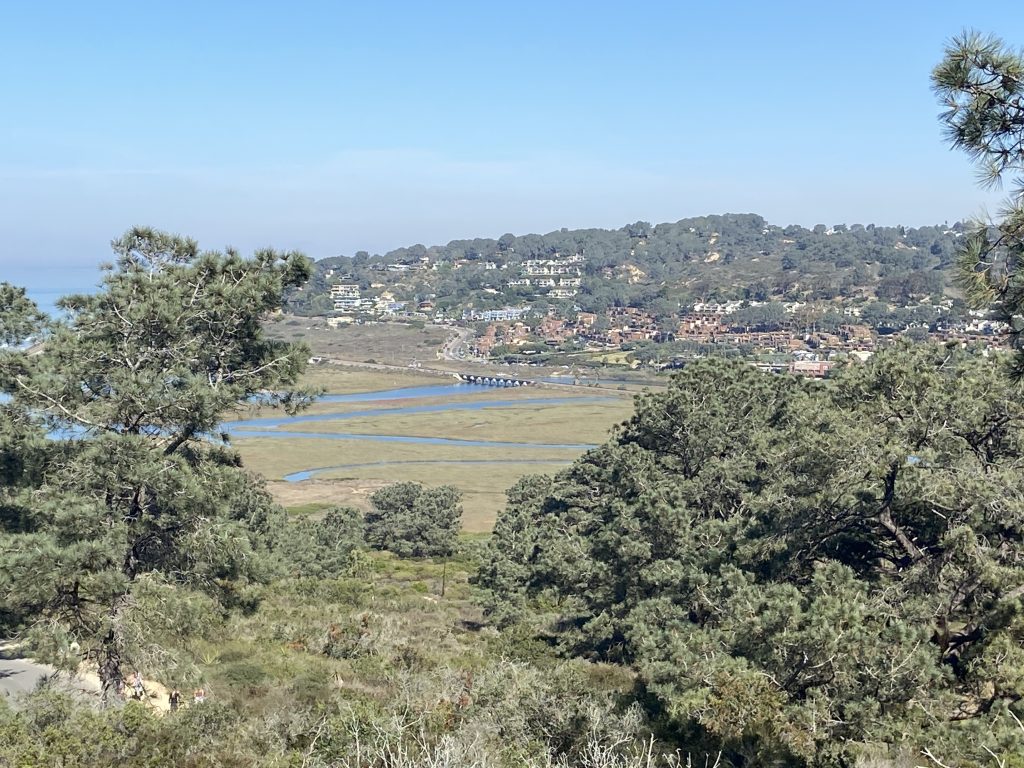
At Torrey Pines Natural Reserve, you can see San Diego’s native plant communities including maritime succulent scrub, coastal sage scrub and endangered Torrey Pine Woodlands.
Along the northern edge, you can take the marsh trail and explore Los Peñasquitos Lagoon. This salt marsh wetland is a stopover on the Pacific Flyway. Birds stop here as they migrate from Alaska to the tip of South America.
Protecting the Rare Torrey Pine
By 1910, a coastal road connected La Jolla and Del Mar. It ran from the Shores, through the Torrey Pines, and across Los Peñasquitos Marsh. The bluffs of Torrey Pines became a popular place to picnic and litter.
In addition, local residents gathered up branches, pinecones, and sometimes entire trees to use as Christmas decorations. The bluffs were a popular camping site. The pines were burned for firewood.
Naturalist Guy Fleming led a campaign to protect the Torrey Pines.
“This will be Your Park. Its object will be to teach the conservation of all of Nature’s works, to use them and enjoy them in such a way that all of the people for all time may know of their beauty and usefulness.”
Guy Fleming, 1921
The Torrey Pines Natural Reserve and Lodge Established in 1921
In 1921, with the support of Ellen Browning Scripps,1,500 acres were set aside as the Torrey Pines State Natural Reserve. Guy Fleming became the park’s first caretaker. He developed the trail system.
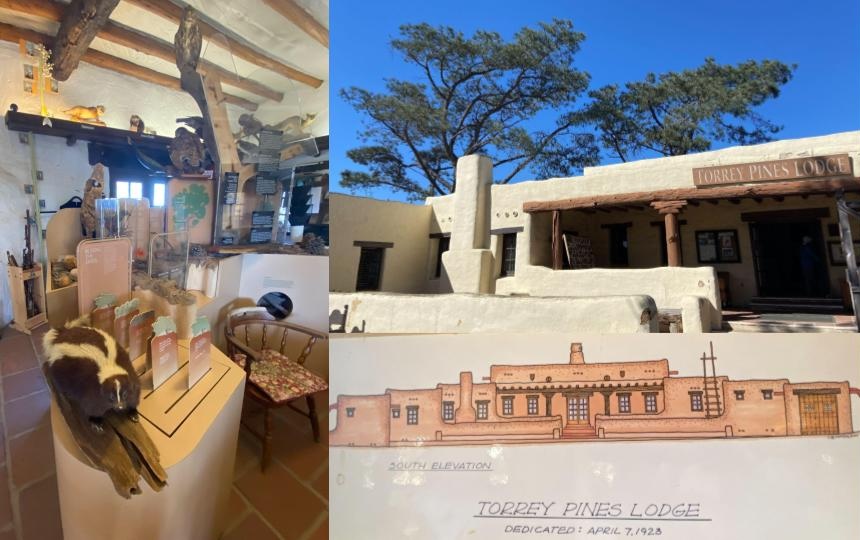
E. Scripps financed the construction of the Torrey Pines Lodge. The lodge included restrooms, dining areas and a gift shop. It was built out of adobe, in the style of Hopi Indian houses. Now the Loge has an old fashioned nature museum with taxidermy animals and a great selection of books.
The Torrey Pine
The Reserve was created to protect the Torrey Pine (Pinus torreyana.) The pine is native to two areas in North America. One location is the Torrey Pines State Natural Reserve and the Torrey Pines Extension. The second population occurs on Santa Rosa Island, in Channel Islands National Park. Probably fewer than 10,000 Torrey Pines exist in their native setting today.
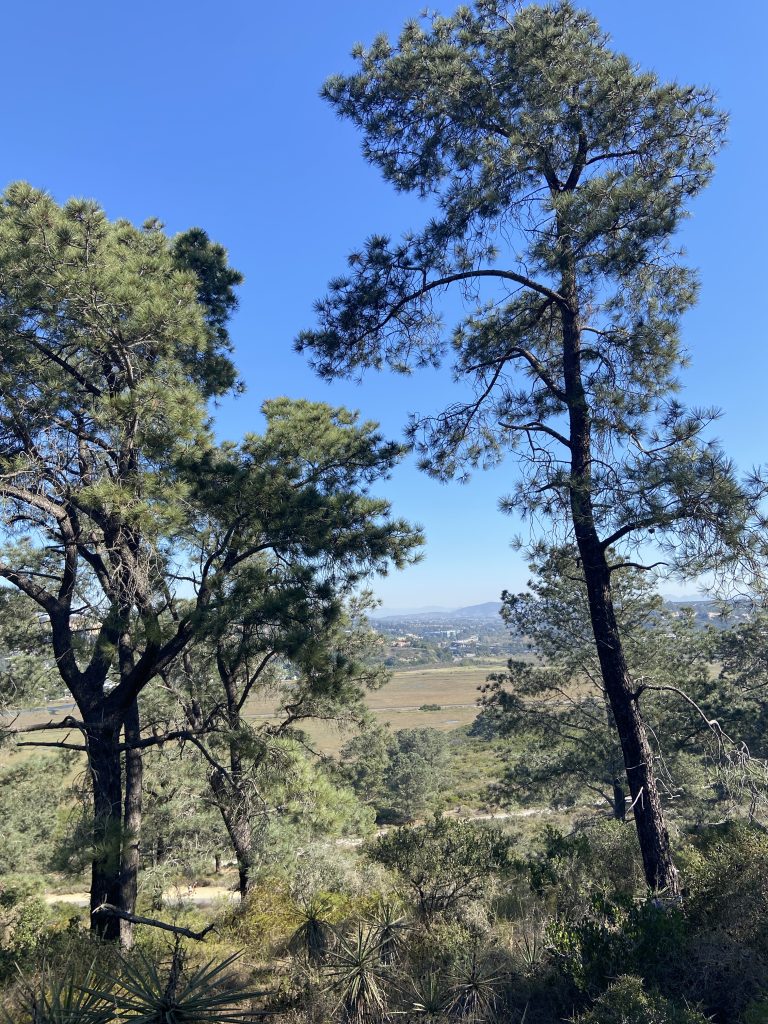
Islands. (Kimberly Us)
Torrey Pine needles can withstand buffeting by coastal winds. Their gray-green color helps reflect excess sunlight and conserve water. Their needles are designed to capture water from the fog.
Droughts, air pollution and climate change are threatening Torrey Pines. The native five-spined ips beetle creates snags and dead tops in the large pines.
Coastal Sage Scrub and Southern Maritime Chaparral
Take the short trail through Whitaker Garden and learn about the two main plant communities found in the Torrey Pines State Natural Reserve.
Coastal Sage shrubs are low-growing and include California Sagebrush, Black Sage and flat-top Buckwheat. Their foliage appears dead in the dry season. However, the winter rains of our Mediterranean climate bring it back.
Chaparral shrubs are taller and thicker-stemmed. They include Chamise, Nuttall’s Scrub Oak, Lemonade Berry and Toyon. These plants have denser, waxy-coated foliage that stays green throughout the year.
The Torrey Pines State Natural Reserve Offers Entertainment for all Ages
Six trails weave through the Reserve and one ends down on the beach. The trails range in length and difficulty and are clearly marked.

Since it is a reserve and not a park, there are specific rules. No pets are allowed. No food or drinks (other than water) are permitted above the beach. You must pack out your trash.
Whether you are a San Diego local or a visitor, make plans to see what Southern California’s wild landscape looked like before development.
Vist the Torrey Pines State Natural Reserve!



Leave a Reply