
The Hollywood Forever Cemetery is an oasis of green in the center of a seamy city. The symbolism needs no explanation.
Tombstones and mausoleums fight for attention. Celebrities even in death. Statues of rockets, giant Bibles, and Johnny Ramone playing his guitar. Palm trees, junipers and fig trees throw shade.
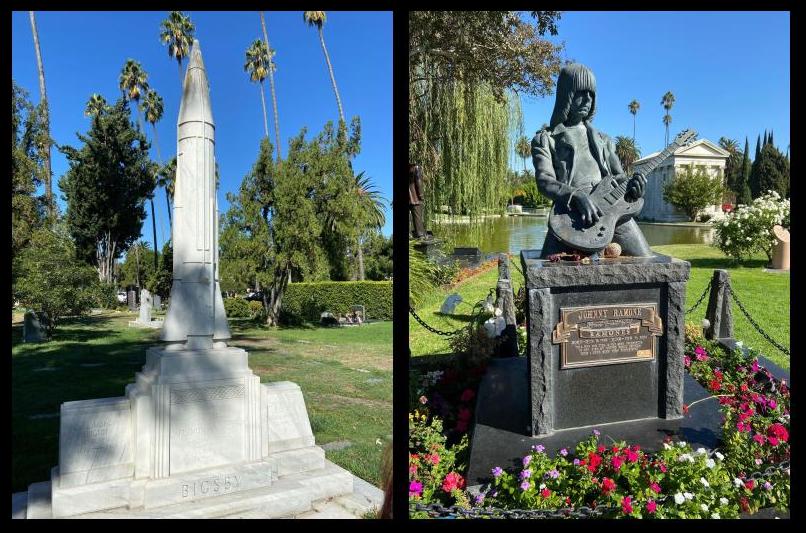
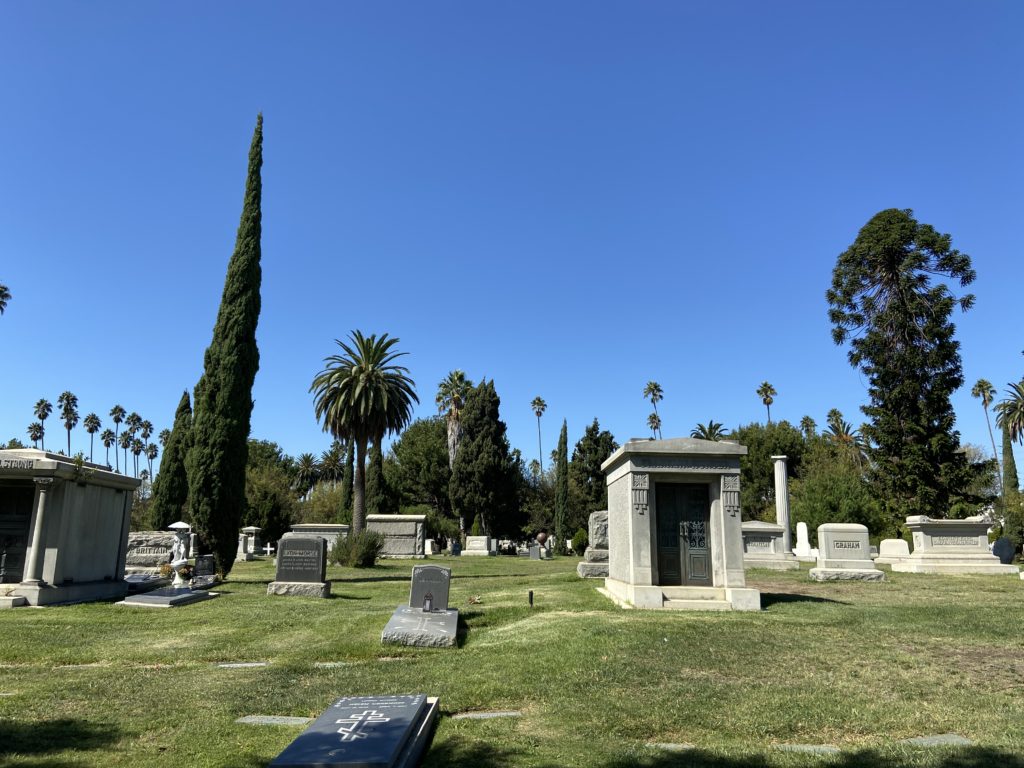
Hollywood Forever Cemetery has gravestones that offer a glimpse into unique lives. Different from the modern cemetery with its uniform flat markers regulated for easy lawn mowing.
Gravestones tilted from the last earthquake, tree roots pushing up the sidewalk paving. Restless below the surface. Ghost-like photographs etched in white onto black granite.
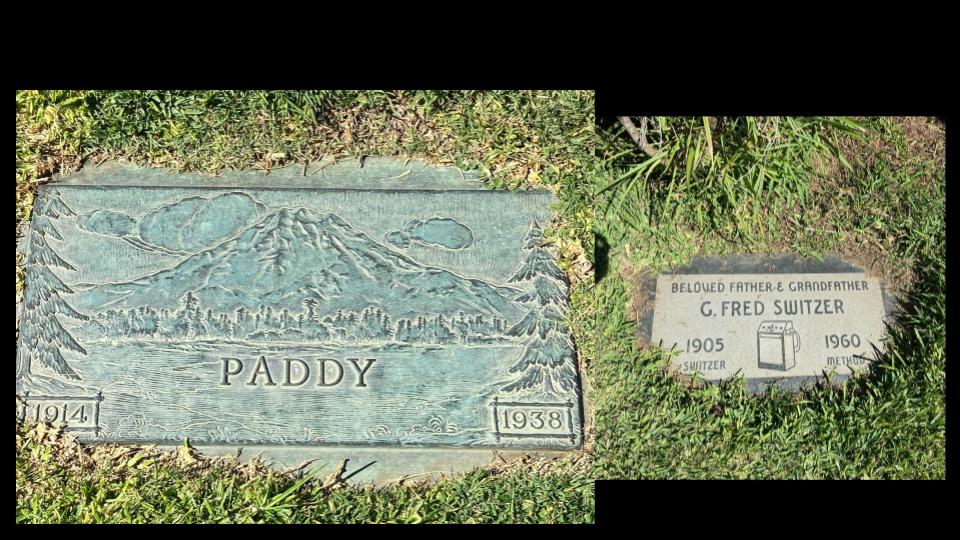
Witness a modest plaque bearing the picture of a breast enhancement machine–G.Fred Switzer’s greatest invention. Or the marker for “Paddy,” no last name, 1914-1938. Engraved with a detailed mountain scene.
I would have liked to have known Mike Szymanski, whose couch-like tombstone is surrounded with eight bronze dachshunds. (Update: He reached out to me to let me know he is alive and well!)

Ancient Egyptian Death Mythology
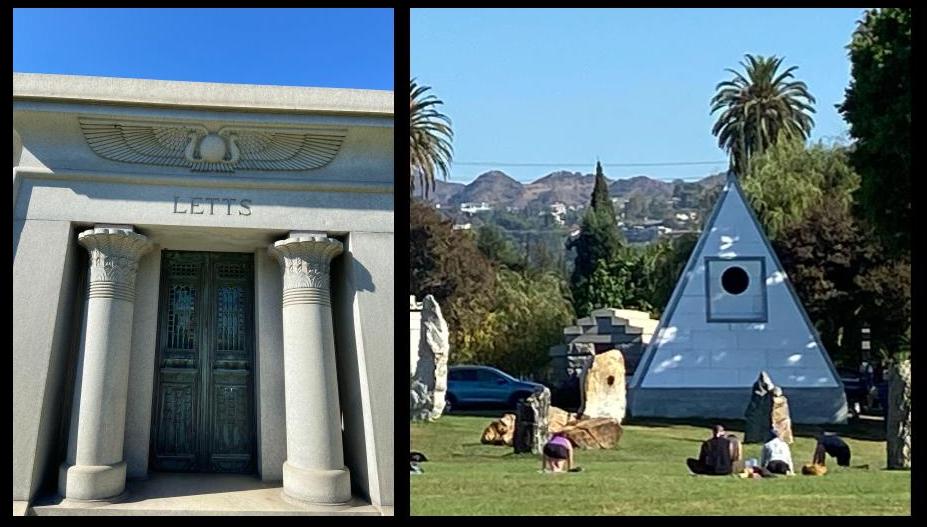
A giant pyramid, constructed in the 2010s, vies for attention with an Egyptian style mausoleum constructed in the 1910s.
Maybe the Egyptian Underworld Journey is what we all subconsciously long for?
The elaborate body preparations, the trials with fearsome beasts, lakes of fire, and magical gates with formidable gatekeepers. In death, we travel through our own hero’s journey after a life spent cowering.
Or is it the Hall of Judgement we desire?
Weigh your heart against the feather of truth to see if you had lived a virtuous life. Too heavy? Feed your heart to Ammut, the ‘Devourer,’ a goddess part lion, hippo and crocodile. Then cast your soul into darkness. Pass the test with a balanced scale and be welcomed into the afterlife by Osiris.
It is satisfying to think that justice will be served after death. It is rarely dispensed in life–especially for the rich and famous.
Griffith Jenkins Griffith and the Griffith Observatory
Griffith Jenkins Griffith, gave Griffith Park to Los Angeles in 1896 as a Christmas present. In 1903, he shot his wife in the head and attested it was her suicide attempt. She lived and testified it was attempted murder. His lawyer claimed the shooting was due to “alcoholic insanity.” Griffith was convicted only of a misdemeanor. As consolation, the court granted his wife the divorce she requested. Griffith’s punishment: five years in San Quentin.
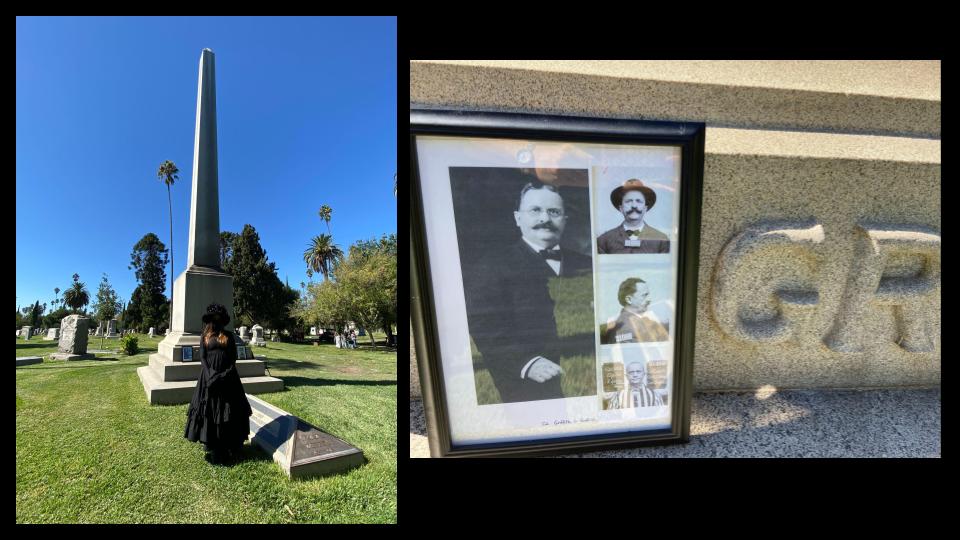
Griffith was released and wanted to reenter society with his former prestige. So, in 1912, Griffith offered the City of Los Angeles $100,000 to build an observatory in his name. They rejected his tainted money. He died in 1919. Sixteen years later the money he left in trust was used to build his observatory. Los Angeles forgave him, but I’ll wager his heart was too heavy to pass the scale of judgement.
Los Angeles Times Founder and his Martyrs
Harrison Gray Otis founded the Los Angeles Times in 1883. He was an original member of Lincoln’s Republican Party and opposed to slavery. Although a philanthropist, he was vehemently anti-Union. Using his newspaper and legislative tactics, he spent 20 years destroying union organizational efforts in Los Angeles.
On October 1, 1910, a union member, belonging to the International Association of Bridge and Structural Iron Workers, dynamited the Los Angeles Times Building. The explosion, and ensuing fire, killed 21 newspaper employees and injured 100 more. It was called “The Crime of the Century” by the newspaper and turned public opinion against organized labor.
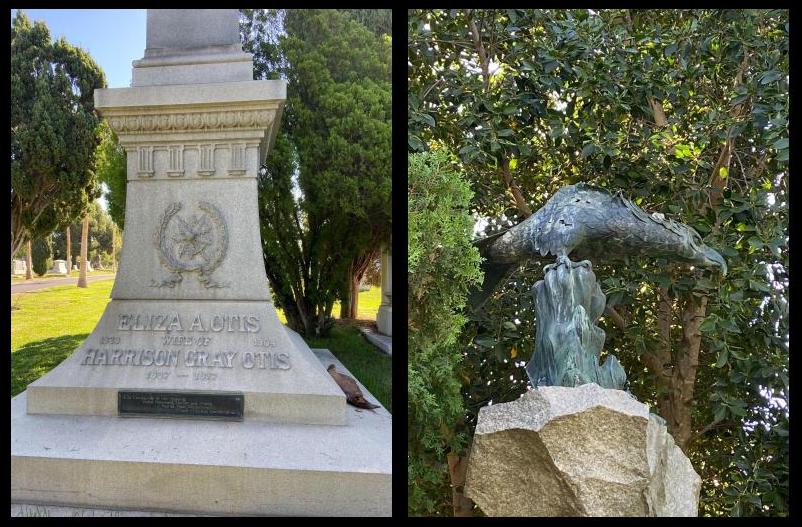
Otis erected a memorial for “Our Martyred Men.” In true newspaperman fashion, the plaque continues to headline his anti-union bias.
“…the faithful workmen whose fire-scathed yet sacred remains have common sepulture beneath this sod, made a luminous record of duty done, serving as a beacon-light to all who may follow them–to all who value Industrial Independence above Industrial Slavery.”
Plaque on the L.A. Times Bombing Memorial
Yoga in the Cemetery
The modern mission of cemeteries is to become a part of the community. How do you feel about Yoga in the cemetery? I think it is a fitting way to normalize death.

Musings on Death
From Here to Eternity: Traveling the World to Find a Good Death, by Caitlin Doughty, compares the death rituals of other cultures with our American practices. The quick removal of the body, the distance between loved ones and the corpse, and the lack of healing rituals all contribute to American’s fear of death. A fear you see played out in the hospital system that won’t let people die. No-kill animal shelters, and the resistance to talk about death, suicide or euthinasia.
I’ve always been interested in death. Not a suicidal interest, but in cemeteries and rituals and gravestones. The finality of it despite a life spent chasing–love, fame, money, remembrance.
Life’s but a walking shadow, a poor player,
That struts and frets his hour upon the stage,
And then is heard no more. It is a tale
Told by an idiot, full of sound and fury,
Signifying nothing.”
William Shakespeare, Macbeth
Conclusion
The Hollywood Forever Cemetery is a tranquil place to spend time reflecting. The Hollywood Sign is visible on the hillside as you stand at the fountain and look out the gates. Celebrities, forgotten and remembered, surround you as silent witnesses.
But Death keeps reaping, and nearby you will see workers digging a fresh grave.


Leave a Reply